Psoriasis treatment by Ayurveda focuses on restoring doshic balance by detoxifying the body and pacifying the aggravated Pitta-Vata. Unlike conventional treatments that are known to address only the symptoms, Ayurvedic treatment of Psoriasis treats the root cause. Psoriasis is one of the most common dermatologic disorders of the present day. It is a disease that affects a person’s physical and mental health. It is not only a cosmetic issue; it is a chronic, long-lasting, and oftethen distressing condition.
Also, this affects a person’s self-confidence to a great extent. It’s challenging to treat psoriasis from its root cause, but you might be interested in trying Ayurveda to relieve your psoriasis. However, at VVAC you will find a potent Psoriasis treatment in Ayurveda.
What is Psoriasis?
Psoriasis is a chronic autoimmune disorder that causes the rapid buildup of skin cells. This buildup of cells results in red, scaly skin that may feel painful, swollen, or hot. The dry scaling patches are of various sizes, covered by greyish-white or silvery-white lamellar scales.
What are the Common Types of Psoriasis?
There are mainly five types of psoriasis.
- Plaque Psoriasis: The most common type of psoriasis and is characterized by patches of dry, itchy, raised skin that are covered with scales. Typically, they appear on the scalp, lower back, knees, and elbows.
- Guttate Psoriasis: Guttate psoriasis is a type of psoriasis that shows up on your skin with several small, drop-like lesions.
- Pustular Psoriasis: Pustular psoriasis has small, pus-filled lumps on top of plaques.
- Inverse Psoriasis: Inverse psoriasis causes smooth patches of inflamed skin in the folds of the skin and is made worse by friction and sweating. It is mainly found in the armpits, groin, under the breasts, and in other skin folds of the body.
- Erythrodermic Psoriasis: Erythrodermic psoriasis is an inflammatory type of psoriasis that can cause a red, flaky rash that spreads throughout the body.
A person can have several types of psoriasis during their lifetime.
Common Symptoms of Psoriasis
Symptoms of psoriasis vary from person to person and depend on the type of psoriasis you have. Psoriasis can affect large parts of your body or certain areas, such as your elbows or scalp. The following are the most common symptoms of psoriasis:
- Raised and inflamed skin lesions that appear red on fair skin and brown or purple on darker skin
- Plaques and scaly skin
- Anxiety and discomfort
- Consistent pain in the joints
- Dry skin with scales that may crack and bleed
- Redness and soreness around patches
- Burning and itching sensations around patches
- Nail changes such as thick, pitted nails
- Swollen and painful joints or tendons
- Dandruff on the scalp
Not everyone will experience each of these symptoms. If they have a less common type of psoriasis, their symptoms will be completely different.
Causes of Psoriasis
Psoriasis is an autoimmune disease characterized by excessive skin growth that accumulates and forms scales.
The common triggers of psoriasis include:
- Bacterial or viral infections
- Dry air
- Injury to the skin, such as insect bites, cuts, burns, and other skin rashes
- Some medicines like antimalaria drugs, lithium, tetracycline, and beta-blockers
- Stress and anxiety
- Skin injuries like bug bites, sunburns, and scratches
- Cold, dry weather
- Hormonal Imbalance
- Poor Immune system
- Using chemical-based harsh products
Best Psoriasis Treatment in Ayurveda
In Ayurveda, the description of Kushta-roga finds similarities with psoriasis. As per Ayurvedic literature, Kiṭibha is compared and accepted with Psoriasis and one of the varieties of Kuṣṭha Roga.
According to Ayurveda, psoriasis is caused by the vitiation of Vata, Pitta, Kapha, and Rakta Doshas. Psoriasis can be effectively treated by Ayurveda as it helps balance these Doshas. Ayurvedic treatment for psoriasis on the body emphasizes the proper rejuvenation of the skin and purification of the body through Shodhan (purification) as well as Shaman Chikitsa (palliative treatment) for marked improvement.
During the after-treatment period, patients must follow a strict dietary regimen and lifestyle to prevent recurrence of the issue.
The nature of the illness is such that the chances of remission and progression are high. Hence, the disease needs to be managed by both Shodhana and Shamana therapies.
Best Ayurvedic Treatment for Psoriasis by Vaidyaratnam Vrindavan Ayurveda Chikitsalayam
The best Psoriasis treatment in Ayurveda is provided by VVAC in Lower Himachal Pradesh, which is near Chandigarh. Kerala’s Vaidyaratnam founded it. We aim to provide patients with a comprehensive approach and support them every step of the way. Our team comprises Kerala’s most skilled Ayurvedic physicians (Ashtvaidyan) who have wide experience in 8 branches of Ayurveda.
They analyze psoriasis and other body malfunctions by evaluating each patient’s constitution (prakriti), taking into account their medical history and symptoms. The specialists at VVAC use a customized treatment plan for psoriasis that includes panchakarma therapy, dietary guidelines, yoga, oral medication, and meditation.
We have more than 100 different types of medicinal oils and 600 different types of herbal remedies that are formulated and manufactured by Vaidyaratnam, Kerala.
The wellness center is nestled in a peaceful, lush green corner that is rejuvenating and great for reducing stress and speeding up recovery.
At VVAC, we offer a variety of Panchakarma therapies for Psoriasis treatment in Ayurveda –

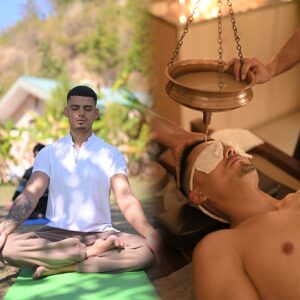
- Shirodhara: Shirodhara is a therapeutic method of pouring medicated oil or decoction on the forehead in a rhythmic pattern for a specific time. Shirodhara is one of the most effective treatments for reducing stress, which can trigger psoriasis flare-ups. Shirodhara induces a sensation of relaxation across the entire body, and it is the best Ayurvedic treatment for psoriasis on the scalp.
- Abhyanga: Abhyanga, a full-body massage recommended for all types of psoriasis. Massaging with warm, medicated oils soothes the skin, reduces inflammation, and improves blood circulation.
- Herbal Baths: People with psoriasis may find great relief and benefits from taking herbal baths. Various therapeutic herbal baths are available at VVAC, such as neem, turmeric, and aloe vera baths.
- Vamana (Emesis Therapy): Vamana is the prime therapy for all types of skin conditions. Through Vamana therapy, medicines are ingested by the patients under the supervision of therapists and senior ayurvedic doctors at VVAC. This ayurvedic therapy for Psoriasis is followed after proper Snehana and Swedana, which leads to expulsion doshas out of the body through vomiting.
-
Basti (Enema Therapy): Basti is one of the main treatments in Panchakarma and is primarily used to eliminate Vata dosha from the body. In this therapy, medicated decoctions (Kashaya), oils (Taila), or ghee (Ghrita) are administered through the rectum.
In psoriasis, Basti using Tikta (bitter) herbs helps relieve symptoms such as dryness, scaling, and may also help reduce inflammation by balancing the doshas and nourishing the tissues.
VVAC’s Case Study and Results for Psoriasis Treatment in Ayurveda
Ajay’s Psoriasis Healing Journey at VVAC
Ajay came to VVAC with just a small patch of psoriasis on his back that gradually spread and caused him a lot of distress. Our senior doctor examined him and began his personalized Ayurvedic treatment. Fresh medicines were prepared at Kashayapura, and therapies like Takradhara, Kashaya Dhara, and other classical Panchakarma treatments were started.
Even after the first session, Ajay noticed a significant improvement. Though his BP briefly dropped to 30, he was carefully monitored and cared for. Within his first stay, symptoms like itching, inflammation, and redness started to settle.
We advised Ajay to continue visiting twice or thrice for sustained healing.
Note: All health seekers are requested to bring previous medical reports and any ongoing medications when visiting VVAC.
Herbs for Psoriasis Treatment in Ayurveda
Psoriasis can be treated both externally and internally with a variety of Ayurvedic medicines. Some of the most commonly used herbs include:
- Ghrit Kumari (Aloe vera): Aloe extract aids in the reduction of mild to moderate psoriasis-related redness, scaling, itching, and inflammation.
-
Haridra (Turmeric): Haridra is known for its antioxidant, anti-allergic, antibiotic, and anti-inflammatory properties, which help reduce psoriatic inflammation. It is highly effective in treating various Kushta (skin disorders), supports respiratory health, improves skin glow, and is beneficial in managing diabetes. Also, Haridra helps purify the blood, which plays an important role in relieving the symptoms of psoriasis.
- Gandhak: Gandhak, also known as purified Sulphur, has Kushthaghna property, which allows it to be used in various skin conditions. The herb has anti-inflammatory and anti-oxidant properties, which play a key role in reducing inflammation and modulating the immune system. As mentioned in the Ayurvedic texts, Gandhak has Kledaghna, Ampachana, Raktaprasadana, and Rasayana properties too.
- Manjishtha: Manjishtha herb is a widely used herb for the treatment of Psoriasis. It is said that Manjishtha consists of anti-psoriatic contents, which makes it an excellent choice for the Ayurvedic treatment of Psoriasis. Additionally, it balances Pitta and Kapha dosha in the body as it has Raktashuddhikara, Vranaropana (wound healing), and Kushthaghna properties.
- Guggulu (Commiphora wightii): Guggulu is used for its detoxifying and anti-inflammatory properties. It is a blood-purifying herb and removes accumulated toxins from the body. It may help in balancing Doshas and improve skin health.
- Sariva: Sariva contains anti-inflammatory, immunomodulatory and antioxidant properties which are responsible for relieving the symptoms of Psoriasis. Also, it is effective in Psoriasis due to Raktaprasadana, Dahaprashamana (reduces burning sensation), and Shothahara (anti-inflammatory) properties.
- Neem (Azadirachta indica): Neem has anti-inflammatory properties that may make it helpful for psoriasis. Frequent use of neem oil helps reduce skin rashes and dryness related to psoriasis. The Ropan (healing) and Kshaya (astringent) properties of Neem help reduce redness and swelling associated with psoriasis.
Diet for Psoriasis as a part of Psoriasis Ayurvedic
- Colorful fruits and vegetables, green leafy vegetables, cherries, and berries are good for psoriasis, as they are rich in antioxidants. These may help neutralize harmful free radicals and reduce inflammation.
- Include plant-based proteins in your diet, such as tofu, lean protein and fish.
- Take herbs like sage, ginger, which, and cumin are rich in antioxidants.
- A fistful of nuts and seeds like walnuts, flaxseeds, and almonds are rich source of omega-3 fatty acids. These can help reduce the symptoms of psoriasis.
- Eat foods containing phytochemicals like turmeric, ginger, and green tea as they have anti-inflammatory properties.
- Avoid processed food, saturated fats like red meat and full-fat dairy products, as they can contribute to inflammation.
Yoga Asanas for Psoriasis Treatment
Yoga asanas help improve general health and skin health. It helps reduce stress, promote blood flow, improve flexibility, and promote relaxation.
- Balasana (Child’s Pose)
- Standing Forward Fold (Uttanasana)
- Cat-Cow Pose (Marjaryasana-Bitilasana)
- Cobra Pose (Bhujangasana)
- Bridge Pose (Setu Bandhasana)
- Fish Pose (Matsyasana)
- Legs Up the Wall Pose (Viparita Karani)
- Corpse Pose (Savasana)
FAQs
Can psoriasis be permanently cured?
Psoriasis has no permanent cure in Ayurveda. Psoriasis treatment in Ayurveda focuses on long-term management of the ailment. Also, detoxifying the body, balancing the doshas, and calming the immune response. Based on a study published in the Journal of Ayurveda and Integrative Medicine, Psoriasis treatment by Ayurveda helped a 68-year old female patient. This woman had a history of plaque Psoriasis and found relief through Ayurvedic Psoriasis treatment. She observed rapid improvement in itching and redness within the first month of treatment.
How do you treat psoriasis on the elbow?
Psoriasis Ayurveda reduces dryness, inflammation, redness, and toxin buildup on the elbow. Ayurvedic treatment for skin uses herbal oils, medicated lepas, internal herbal medicines, and diet changes. Psoriasis treatment by Ayurveda helps patients suffering from thick and stubborn plaques.
What foods should be avoided in Ayurveda for psoriasis?
In Psoriasis in Ayurveda, certain foods can disturb the digestive process. Ayurveda advises patients to avoid dairy products, fried masala foods, refined sugary products, fermented foods, red meat, seafood, and spicy meals. The simple reason is that these foods increase toxins in the body and worsen skin inflammation.
What are the worst foods for psoriasis?
According to Psoriasis treatment by Ayurveda, doctors consider some foods worse. They are bakery items, junk food, alcohol, sour fruits, vinegar, packaged snacks, and excess salt. When a patient consumes these foods, they experience weakened digestion and increased heat and toxins. Together, they flare psoriasis symptoms.
What foods are good for psoriasis?
Psoriasis Treatment in Ayurveda recommends simple, warm, and easy-to-digest foods. For instance, rice, green vegetables, bottle gourd, pumpkin, moong dal, turmeric, ghee in moderation, and herbal teas. They support the healing of Psoriasis.
Can psoriasis cause burning feet?
Yes, in Ayurvedic psoriasis, burning feet are common. Why? Because the Pitta dosha is high. Excess heat and toxins in the body cause burning, redness, and irritation. Psoriasis in Ayurveda treats the burning sensation in the feet by using cooling herbs, detox therapies, and diet correction.
What is the root cause of psoriasis?
In Ayurvedic Psoriasis, the root causes are weak digestion, toxin accumulation (ama), and imbalance of the three doshas. Other possible causes are wrong food combinations, poor lifestyle, stress, and improper dinacharya. The Best Part? Ayurveda targets the root cause and not the skin.
What cures psoriasis fast?
You must understand that Psoriasis treatment by Ayurveda works below the surface level. Detox therapies like Panchakarma, herbal medications, and a strict diet offer long-lasting results.
Is egg bad for psoriasis?
Yes, Ayurveda usually advises patients with Psoriasis to avoid eating eggs. Eggs are difficult to digest and can cause itching and redness in the inflamed area.